A $490 Million Confession: When Power Finally Has to Pay
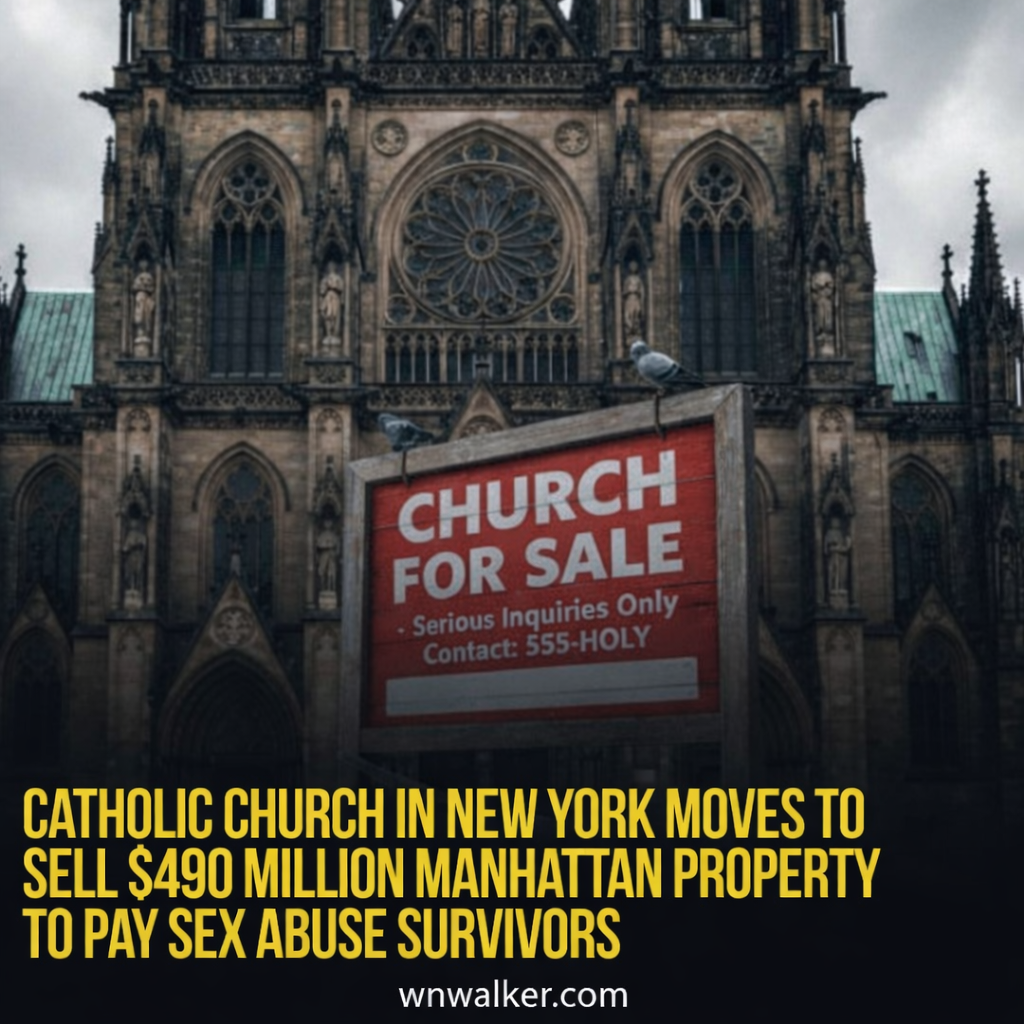
A $490 Million Confession: When Power Finally Has to Pay
For decades, the Catholic Church stood as one of the most powerful institutions in New York City. Immovable. Untouchable. Above reproach in the eyes of many. Now, that illusion is cracking in a very public, very expensive way.
The Archdiocese of New York is preparing to sell the land beneath the iconic Lotte New York Palace Hotel for nearly $490 million. Not to fund expansion. Not to invest in the future. But to compensate more than one thousand survivors of sexual abuse committed under its watch.
This is not just a real estate transaction.
This is a confession written in concrete, deeds, and dollar signs.
And even then, the money may not be enough.
The Cost of Silence
For years, survivors were told to stay quiet.
For years, institutions protected reputations instead of people.
For years, abuse was hidden behind robes, rituals, and respectability.
What we are witnessing now is not generosity. It is pressure.
Pressure from survivors who refused to disappear.
Pressure from laws that finally shifted the balance of power.
Pressure from public scrutiny that institutions can no longer outrun.
New York’s Child Victims Act, passed in 2019, reopened a legal window for survivors to bring civil lawsuits long after the statute of limitations had expired. That single piece of legislation cracked open decades of buried truth. Thousands of claims followed. And suddenly, silence became unaffordable.
When Sacred Assets Become Liquid
Selling church property is not new.
Selling this property is different.
The land under the Lotte New York Palace Hotel sits in one of the most valuable corridors in Manhattan. It’s not symbolic real estate. It’s strategic. It’s legacy-level wealth.
When an institution begins selling crown-jewel assets, it tells you three things clearly:
• The financial exposure is massive
• The legal pressure is real
• The reckoning is no longer theoretical
This sale represents how deeply the crisis has cut into the Church’s financial and moral foundation. It also raises uncomfortable questions that deserve honest answers.
Will the Survivors Actually Be Made Whole?
Let’s talk about the number no one wants to examine too closely.
$490 million sounds enormous.
Until you divide it by over 1,000 survivors.
Until you factor in legal fees.
Until you account for decades of trauma, lost opportunity, broken families, addiction, mental health struggles, and lives permanently altered.
Money does not undo abuse.
Money does not restore childhoods.
Money does not magically heal trauma.
Compensation matters. Accountability matters. But there is a difference between paying claims and owning harm.
Many survivors are still asking:
• Why did it take lawsuits to be believed
• Why were abusers moved instead of removed
• Why was the institution protected before the children
Those questions don’t disappear with a settlement check.
Accountability vs. Optics
Here’s the hard truth.
Institutions rarely change because they grow a conscience.
They change when consequences finally outweigh protection.
This sale forces us to ask whether accountability is being embraced or merely managed.
Is this about justice or damage control
Is this about survivors or solvency
Is this the beginning of transparency or the cost of delay
True accountability isn’t just financial. It’s cultural. It requires naming what happened without euphemisms. It requires systemic change, not just asset liquidation.
A Broader Pattern We Can’t Ignore
This story isn’t isolated.
It fits a much larger pattern.
Across governments, corporations, churches, and legacy institutions, we are watching a slow collapse of unchecked authority. Power that once relied on silence is now being challenged by documentation, law, and voices that refuse to be dismissed.
The lesson is uncomfortable but necessary:
No institution is too sacred to be questioned.
No reputation is worth more than human safety.
And no amount of wealth erases responsibility.
What This Moment Really Represents
This isn’t about religion.
It’s about power without accountability.
It’s about what happens when institutions prioritize image over people for so long that the bill eventually comes due with interest.
Selling land under a luxury Manhattan hotel to pay survivors is not redemption.
It is recognition.
Recognition that harm was real.
Recognition that silence failed.
Recognition that truth has a price.
And for the survivors who carried this pain quietly for decades, that recognition, however late, still matters.
Final Thought
This moment should not be treated as shocking.
It should be treated as overdue.
If institutions want trust, they must earn it.
If they want moral authority, they must live it.
And if they want forgiveness, it begins with full accountability, not just expensive settlements.
History is watching who chooses responsibility and who waits until they are forced.
And this time, the bill came with a deed attached.
References & Context
• Baller Alert – Full story coverage
https://balleralert.com/kezp
• New York Child Victims Act (2019)
https://nycourts.gov/ChildVictimsAct
• Archdiocese of New York abuse claims reporting
https://archny.org
If this conversation matters to you, share it.
Silence is how harm survives.