Black History Month Beyond Borders: How Mexico Helped Me Understand My African Identity More Deeply
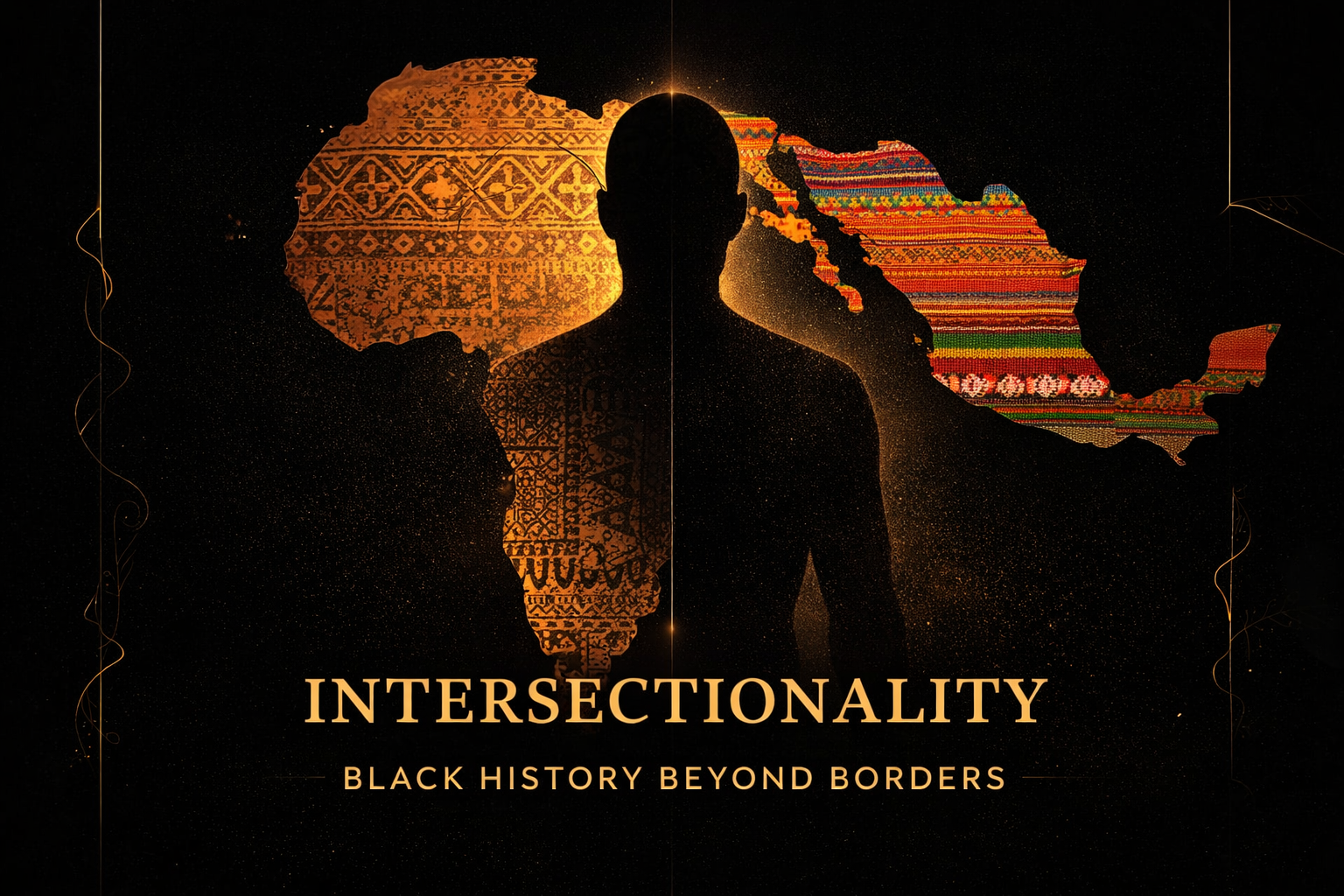
Black History Month is often framed as an American story.
Plantations. Civil Rights. Reconstruction. Segregation. Harlem. Atlanta. Chicago.
But Black history does not live inside borders. It lives inside people. It lives inside migration, resistance, rhythm, survival, and memory. And when you widen the lens beyond the United States, something powerful happens.
You realize that Africa did not just land in one place in the Americas. It landed everywhere.
Mexico included.
One of the most overlooked truths in North American history is this: Mexico had a president of African descent who abolished slavery in 1829. Vicente Guerrero, a hero of Mexico’s War of Independence and the nation’s second president, issued a decree formally ending slavery nationwide. Decades before the United States would do the same.
Let that sink in.
Black leadership was not outside the Mexican story. It was inside the foundation of the republic.
And that is where intersectionality begins to reveal itself.
Mexico has long described itself as a nation born from two roots: Indigenous and Spanish. But historians and communities across the country have been reclaiming what is often called the third root: Africa. During the colonial period, hundreds of thousands of Africans were brought to New Spain. Over time, they built families, communities, and cultural traditions that became woven into Mexican identity.
In places like Veracruz and the Costa Chica region of Guerrero and Oaxaca, Afro Mexican communities still carry visible and cultural traces of that history. The music, the rhythms, the food, the resilience. It is not foreign. It is foundational.
Yet for generations, African contributions in Mexico were minimized or absorbed into a broader “mixed race” narrative. Sound familiar?
Because here is where the parallel becomes undeniable.
Both Black Americans and Afro Mexicans have had to fight erasure. Both have navigated systems built on colonial hierarchies. Both have experienced colorism within their own communities. Both have preserved culture through music, storytelling, spirituality, and family despite systemic pressure.
Different languages. Different national histories. Same architecture of struggle.
Intersectionality is not an academic buzzword. It is lived reality. It is what happens when African ancestry intersects with Indigenous roots, with Spanish colonial legacy, with class, with geography, with modern politics. It is what happens when identity cannot be boxed into one simplified category.
And that understanding changed me.
Living in Mexico forced me to expand what I thought the African diaspora looked like. It challenged the idea that Black history belongs to one flag or one narrative. It humbled me. Because I realized that while I grew up centered in an American version of Black identity, there are entire branches of our story unfolding in Spanish, in coastal villages, in communities that rarely get mainstream attention.
Connecting to Mexico did not dilute my African identity. It deepened it.
It showed me that Africa’s legacy in the Americas is larger than what many of us were taught. It showed me that Blackness can look different and still be authentic. It showed me that solidarity is stronger when it is informed, not assumed.
When we acknowledge Afro Mexican history during Black History Month, we are not stretching the theme. We are completing it.
We begin to see that the diaspora is interconnected. That liberation movements echo across borders. That representation matters in multiple languages. That pride becomes more powerful when it is shared.
And as communities, we grow stronger when we stop treating each other like outsiders.
Black and Mexican histories intersect in resistance. They intersect in culture. They intersect in the fight against invisibility. They intersect in the ongoing work of reclaiming narratives that were flattened by colonial systems.
The more we recognize those intersections, the less we fall for division.
Black History Month should not just be about looking back at a limited storyline. It should be about repairing memory. Expanding awareness. Honoring the full map of the African diaspora across the Americas.
Mexico is part of that map.
Afro Mexicans are part of that story.
And understanding that has strengthened my sense of self, not weakened it. It has reminded me that my roots are not confined to one geography. They are part of something broader, deeper, and more interconnected than I was ever taught.
When we tell the whole story, we build stronger bridges.
When we honor every root, we build stronger communities.
And when we understand intersectionality not as theory but as shared lived history, we move closer to a kind of unity that is rooted in truth rather than assumption.
Black history does not stop at the border.
It never did.