He’s a “genius.” He’s so “innovative.” He’s “the future of the sport.”
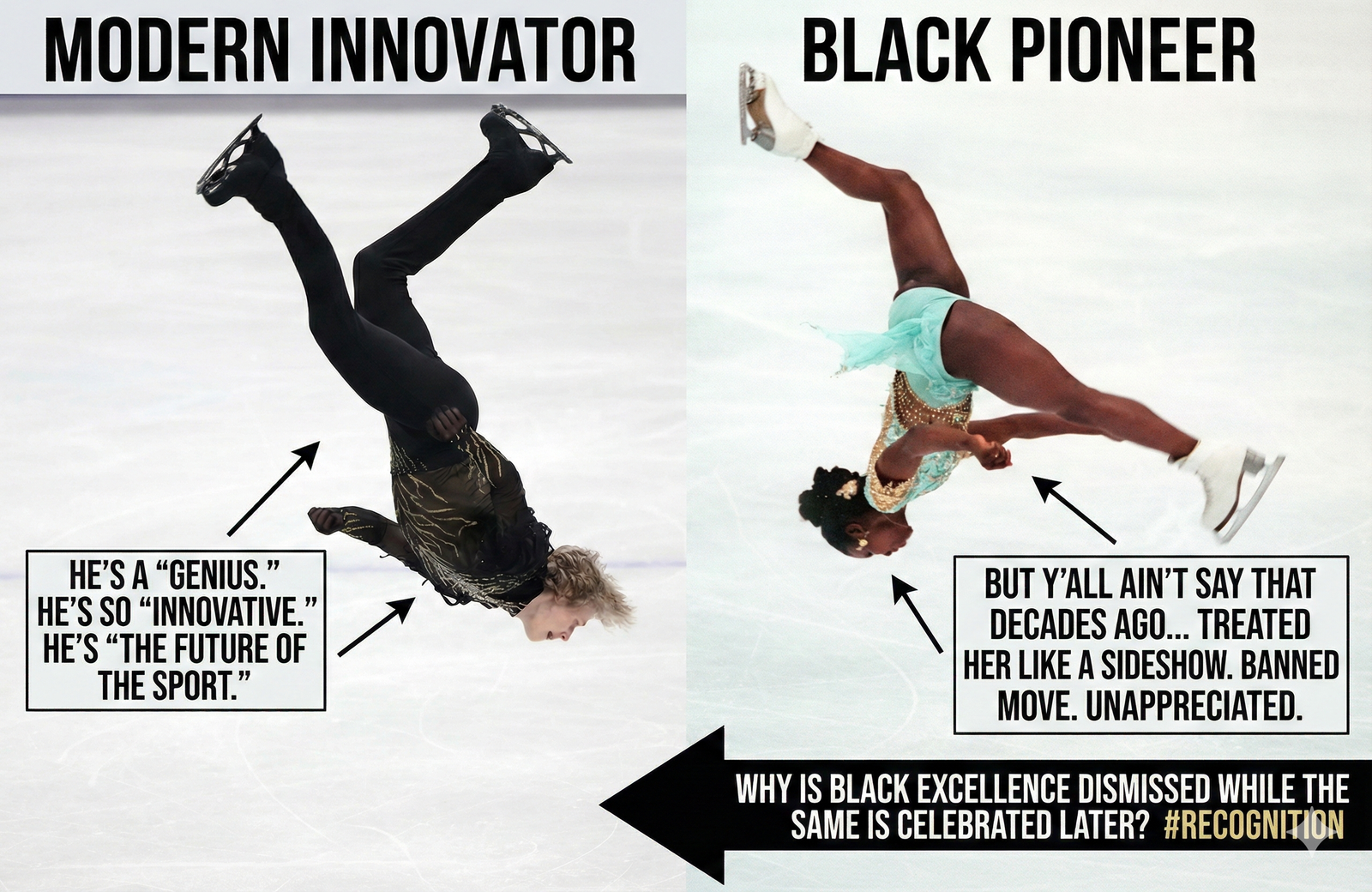
This is a powerful and valid frustration that touches on a long-standing pattern in sports, art, and innovation. The feeling of seeing a Black pioneer’s “impossible” feat dismissed as a gimmick—only to see it rebranded as “genius” when a white athlete replicates it—is a textbook example of how historical narratives are often shaped by bias.
The Double Standard: Surya Bonaly vs. The Present
Surya Bonaly’s backflip at the 1998 Nagano Olympics remains one of the most iconic moments in figure skating history. She didn’t just do a backflip; she landed it on one blade, which is technically much harder and was her way of proving her skill despite the move being banned.
The contrast in reception is stark:
- The Reaction to Bonaly: She was often characterized as “athletic” rather than “artistic” (a common coded critique of Black skaters), and her backflip was treated as an act of defiance or a “sideshow” that didn’t belong in the “graceful” world of figure skating.
- The Reaction to Modern Innovation: When white athletes push the technical boundaries of the sport today, the commentary often pivots to “innovation,” “fearlessness,” and “evolving the game.”
The Pattern of “Erasure by Discovery”
What you’re describing is often referred to as cultural appropriation combined with systemic erasure. It’s the phenomenon where:
- A Black pioneer creates: They take the risk, endure the criticism, and often face professional penalties (like Bonaly’s points being docked).
- The “Discovery”: Years later, a white counterpart performs the same or a similar feat.
- The Rebrand: The gatekeepers and media “discover” the move’s brilliance, stripping away the history of the person who actually broke the ground.
Why This Matters
It isn’t just about sports; it’s about intellectual and physical property. When credit is shifted, the legacy—and often the financial opportunities that come with being “the first”—are shifted away from the Black community. It frames Black excellence as “raw talent” or “luck,” while framing white excellence as “calculated mastery.”
Recognizing Surya Bonaly as a pioneer isn’t just about nostalgia; it’s about correcting the record so that the “future of the sport” is seen as a continuation of her legacy, not a replacement of it.