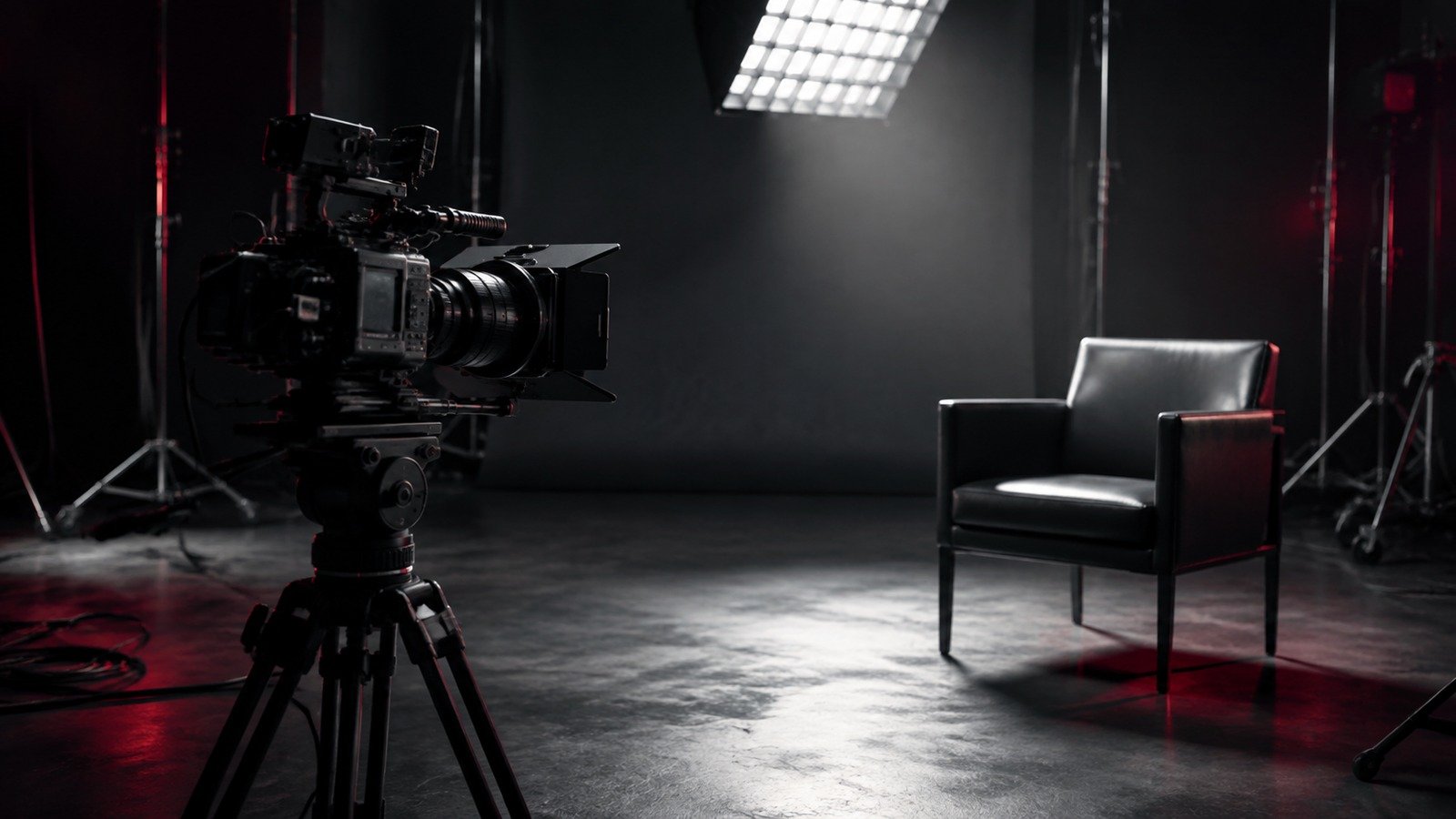
The camera has no opinion about your face.
It does not care that you repeated a word, moved your hands too much or forgot the sentence you practiced in the shower.
The camera is equipment.
The judgment is coming from the imaginary audience you invited into your head before pressing record.
I understand camera discomfort. The moment that little light appears, intelligent adults suddenly forget how mouths work.
The solution is not to wait until fear disappears. The solution is to become familiar enough with the process that fear stops managing the room.
Stop Trying to Look Natural
Nothing makes a person look less natural than trying very hard to appear natural.
You monitor your posture, voice, chin, hands and breathing until the video looks like a hostage statement produced by a lifestyle brand.
Choose one idea and speak to one person.
Imagine the client, friend or audience member who needs the information. Explain it to them. The camera becomes less important when the message becomes more important.
Use Notes, Not a Scripted Personality
Write three points:
- The problem
- What you believe about it
- What the viewer should do next
That is enough structure for most short videos.
Reading a complete script can work, but many people become stiff because they are trying to remember exact wording instead of communicating meaning.
Know the point. Let the sentences arrive naturally.
Your real speaking rhythm contains pauses, corrections and personality. Keep enough of that to sound like a person.
Make Short Videos First
Do not begin by attempting a twenty-minute keynote in one take unless unnecessary suffering is part of your brand.
Start with thirty to sixty seconds. Answer one question. Tell one story. Make one argument.
Short repetition builds familiarity. You learn where to place the phone, how the light behaves, which distance feels comfortable and how your voice sounds when you are not apologizing for it.
Confidence grows from evidence. Every completed video becomes proof that you can do another.
Accept the Face You Actually Have
You will not look exactly like the mirror because cameras, lenses and angles behave differently.
You will also notice details nobody else is studying because they are listening to the message rather than conducting a dermatological investigation.
Choose good light. Clean the lens. Position the camera near eye level. Then let your face participate in your career.
Perfection is not the admission requirement for visibility.
Publish Before You Feel Ready
The first videos may feel awkward. Publish useful ones anyway.
You are not creating a historical record for a museum. You are developing a skill in public.
Most people are far less focused on you than your anxiety suggests. They are thinking about themselves, their problems and whether your video helps.
Give them something worth hearing.
Make the Message Stronger Than the Performance
Preparation matters. Clear audio matters. Respecting the viewer's time matters.
But camera presence is not a talent reserved for a mysterious group of naturally confident people. It is a communication skill.
Skills improve through use.
Press record. Say the thing. Watch it once for clarity, not for emotional self-destruction. Fix what matters. Publish.
Then do it again before your inner critic schedules another production meeting.
The camera is not judging you.
It is waiting.
Ready to turn your knowledge and personality into visible authority? Work with W. N. Walker.