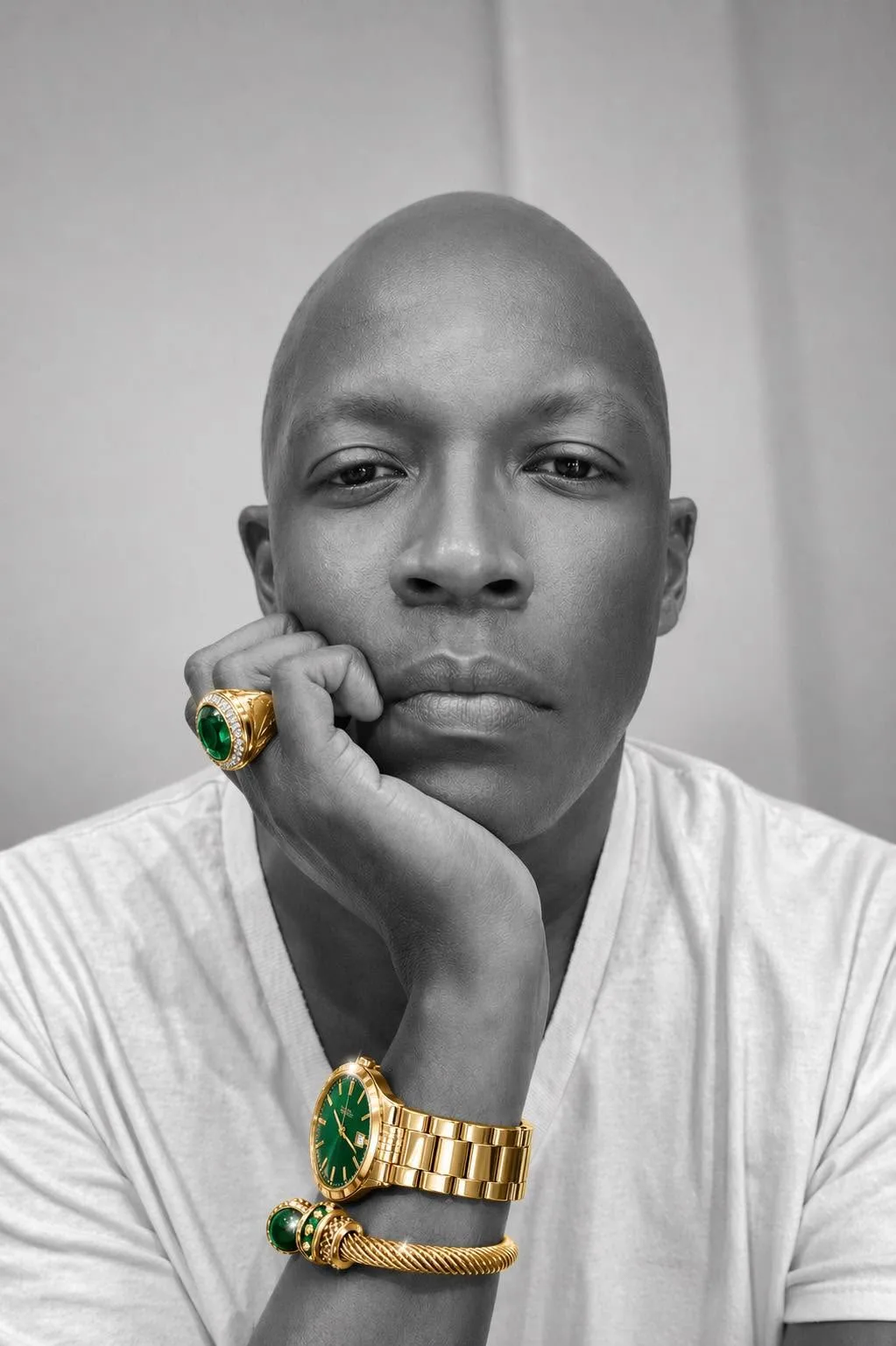
By W.N.Walker
The psychology of reinvention, the emotional cost of entrepreneurship, and the uncomfortable truth about becoming who your next chapter requires you to be.
There is something about entrepreneurship that nobody really prepares you for.
And no, I'm not talking about the financial risk, the long hours, the sleepless nights, or the responsibility of making sure the people who depend on your business get paid.
I'm talking about something much deeper.
The psychological cost of having to become a different version of yourself over and over again, sometimes before you've even had the opportunity to get comfortable with the person you just became.
See, people love to talk about reinvention as though it's some glamorous, once-in-a-lifetime transformation.
You know the story.
You hit rock bottom. You discover your purpose. You make a few difficult decisions. You emerge from the ashes looking fabulous, feeling enlightened, and suddenly everything makes sense.
And everybody applauds.
Well, that's a beautiful story.
It's also incomplete.
Because what nobody tells you is that you might have to burn down certain parts of your thinking, your habits, your expectations, and your identity more than once.
Sometimes several times in the same year.
And if you've been in business long enough, you eventually come to understand something that changes your entire relationship with success.
Evolution is not an event. It's a responsibility.
And the moment you decide that you're finished evolving is often the moment you begin limiting what you're capable of becoming.
The Entrepreneurial Identity Crisis Nobody Talks About
One of the most fascinating things about human psychology is how deeply we attach ourselves to our identities.
We don't simply say, "I own a business."
We say, "I am an entrepreneur."
We don't simply say, "I built something."
We begin to see ourselves through the lens of what we've built.
Our businesses become extensions of our personalities, our intelligence, our ambitions, and sometimes even our sense of personal worth.
And that's where things can get complicated.
Because when something you've built stops working, your brain doesn't always interpret that experience as a business problem.
Sometimes it interprets it as a personal failure.
Think about that.
A business model becomes outdated, and suddenly you start questioning your intelligence.
A marketing strategy stops delivering results, and you begin wondering whether you've lost your touch.
An industry shifts, and instead of recognizing that the marketplace has changed, you start questioning whether you still belong in it.
This is the psychological trap of identity fusion: when the distinction between what you do and who you are becomes so blurred that every professional setback feels like a verdict on your personal value.
And I've learned something about that.
I can be deeply committed to something without allowing it to become the entirety of who I am.
My business can need restructuring without me being a failure.
My strategy can be wrong without me being incompetent.
My direction can change without my purpose disappearing.
And perhaps most importantly, I can walk away from something I once believed in without treating that decision as evidence that I wasted my time.
Sometimes what you built was exactly what you needed to build at that particular stage of your life.
It served its purpose.
It taught you what it was supposed to teach you.
And now it's time to evolve.
The problem is that emotionally, we don't always know how to let go of something that once made us feel successful.
The Grief of Outgrowing Your Own Success
Here's something I wish more entrepreneurs understood.
Growth can involve grief.
Yes. Grief.
Not necessarily because something terrible happened, but because growth often requires you to release something that was once meaningful.
A business that once excited you may no longer challenge you.
A partnership that once made perfect sense may no longer align with your direction.
A professional identity that once gave you confidence may begin to feel restrictive.
And here's the uncomfortable part.
Nothing has to be fundamentally wrong for something to no longer be right.
We don't talk about that enough.
Psychologically, people often associate grief with death, divorce, or the loss of someone they love.
But grief can also emerge when we lose a familiar version of ourselves.
The entrepreneur who spent ten years building a company may experience genuine sadness when they realize that the company needs to become something completely different.
Even if the change is necessary.
Even if the opportunity ahead is greater.
Even if they know, intellectually, that they're making the right decision.
Why?
Because the human mind has an attachment to familiarity.
We like knowing who we are.
We like being able to predict what tomorrow looks like.
We like the emotional security of saying, "This is what I do. This is how I do it. And this is how I've always done it."
But entrepreneurship doesn't necessarily reward emotional familiarity.
It rewards relevance, adaptability, execution, and the willingness to respond to reality.
And sometimes reality has the audacity to change without consulting your feelings.
Imagine that.
You've spent years mastering a particular way of doing business, only to discover that the marketplace has moved on.
Now you have a choice.
You can protect your attachment to the past.
Or you can protect your opportunity to participate in the future.
Both choices have an emotional cost.
But only one gives you room to grow.
Your Brain Was Designed to Protect You, Not Necessarily to Reinvent You
From a psychological perspective, resistance to change is not particularly mysterious.
Our brains are constantly trying to reduce uncertainty, recognize patterns, and conserve mental energy.
Familiar routines require less conscious effort.
Established habits make everyday decisions easier.
Predictability can create a sense of safety.
So when you introduce the possibility of major change, your brain may respond with resistance.
Not because the change is inherently bad.
But because uncertainty requires additional emotional and cognitive resources.
And entrepreneurship is essentially a long-term relationship with uncertainty.
Think about what we ask ourselves to do.
We invest in ideas without knowing whether they'll work.
We hire people without knowing whether they'll stay.
We develop strategies based on information that may become outdated.
We make financial decisions with incomplete certainty.
And then, after successfully navigating all of that, we're expected to do it again.
And again.
And again.
It's mentally demanding.
But here's where I believe emotional maturity becomes essential.
Just because something makes me uncomfortable does not mean it is threatening me.
Sometimes discomfort is information.
Sometimes it reveals a real risk that deserves attention.
Sometimes it exposes a skill I haven't developed.
Sometimes it shows me that I'm trying to use yesterday's knowledge to solve tomorrow's problems.
And sometimes it simply means I'm entering territory that is unfamiliar.
The challenge is learning to distinguish between genuine danger and the discomfort of growth.
Those are not the same thing.
Not every frightening opportunity is worth pursuing, and not every familiar situation is worth preserving.
Maturity is learning to evaluate both without allowing fear to make every decision.
Experience Can Become Your Greatest Asset or Your Most Expensive Liability
Now, this one may upset a few people.
But I'm going to say it anyway.
Just because you've been doing something for twenty years doesn't mean you've been evolving for twenty years.
Sometimes you've been repeating the same year twenty times.
There's a difference.
Experience is valuable when it expands your understanding.
But experience can become a liability when it convinces you that your existing knowledge is sufficient.
I've seen people confuse longevity with relevance.
They believe that because they've survived multiple business cycles, they've automatically earned immunity from the next one.
But markets don't operate on seniority.
Technology doesn't slow down because you're comfortable.
Consumer behavior doesn't ask permission before changing.
And artificial intelligence certainly isn't standing around waiting for people to finish being skeptical.
The marketplace is going to evolve.
With you or without you.
That's not a threat. It's a reality.
And here's something that becomes increasingly important as we get older and more experienced.
We have to remain teachable.
Not performatively teachable.
Not the kind of teachable where we attend a conference, collect some new terminology, and return home doing exactly what we've always done.
I mean genuinely willing to discover that something we believed for years may no longer be accurate.
That's difficult.
Especially when you've built a reputation around knowing what you're doing.
Because sometimes evolution requires an experienced person to become a beginner again.
And the ego does not always appreciate that arrangement.
The Ego Has to Learn How to Take a Back Seat
Let's talk about ego.
Because entrepreneurship and ego have an interesting relationship.
You need enough confidence to believe you can build something that doesn't exist.
You need enough conviction to make decisions when other people don't understand your vision.
You need enough resilience to hear "no" repeatedly without abandoning every ambition you have.
But there's a fine line between confidence and psychological rigidity.
Confidence says, "I believe I can figure this out."
Ego says, "I already know."
Confidence invites growth.
Ego sometimes resists correction.
And if you're not careful, the very confidence that helped you build your first successful business can become the thing preventing you from building your next one.
I've had to confront this within myself.
There are moments when my experience gives me an advantage.
And there are other moments when my experience tempts me to dismiss information simply because it contradicts what I already believe.
That's when I have to ask myself a very important question.
Am I defending the truth, or am I defending my attachment to being right?
Because those are two completely different motivations.
And I don't know about you, but I have absolutely no desire to spend the next chapter of my life defending outdated ideas simply because I was once successful with them.
Being right yesterday does not guarantee relevance tomorrow.
Sometimes the smartest person in the room is the one who can say, "I need to learn something new."
Reinvention Is Not Always About Starting Over
One of the biggest misconceptions about evolution is that it requires you to destroy everything you've built.
It doesn't.
Sometimes evolution means refinement.
Sometimes it means restructuring.
Sometimes it means delegation.
Sometimes it means simplifying your operations, changing your audience, abandoning an unprofitable service, or finally admitting that you're doing too many things at once.
And sometimes, yes, it means starting something entirely new.
The key is understanding the difference between strategic reinvention and emotional impulsiveness.
Because not every moment of frustration is a signal that you need a new business.
Sometimes you're simply exhausted.
Sometimes you're avoiding a difficult conversation.
Sometimes you've confused boredom with misalignment.
And sometimes your desire to start something new is actually an attempt to escape the uncomfortable work required to make something existing successful.
That distinction matters.
Psychologically, novelty can feel rewarding.
A new idea creates excitement.
A new brand creates possibility.
A new website creates the illusion of momentum.
And believe me, I understand the appeal of a beautiful new website.
But a new beginning is not automatically evidence of progress.
Reinvention without reflection can become repetition wearing a different outfit.
You can change the company name, redesign the logo, rebuild the website, and rewrite the business plan.
But if you haven't changed the thinking that created your original problems, you may simply be building a more attractive version of the same limitations.
Real evolution requires internal work.
Not just external activity.
It requires examining your decisions, your motivations, your patterns, your emotional reactions, and the assumptions you've been operating under.
Otherwise, you don't necessarily evolve.
You just relocate the problem.
The Hidden Emotional Exhaustion of Constantly Having to Figure It Out
There's another part of entrepreneurship that deserves more attention.
The mental fatigue.
Not the ordinary tiredness that comes from having a busy day.
I'm talking about the exhaustion that develops when your mind rarely gets permission to stop solving problems.
The employees need answers.
The customers have expectations.
The bills have deadlines.
The marketplace keeps moving.
Technology keeps changing.
And somewhere in the middle of all of that, you're still expected to be creative, decisive, optimistic, and emotionally available.
That's a lot.
Entrepreneurs often become so accustomed to functioning under pressure that they begin treating chronic stress as part of their personalities.
They say things like:
"I'm just wired this way."
"I work better under pressure."
"I don't know how to slow down."
"I'll rest when everything is finished."
Well, here's the problem.
Everything is never finished.
There will always be another project, another opportunity, another problem, another goal.
And if your psychological well-being depends on reaching a point where nothing requires your attention, you may spend your entire professional life waiting for a moment that never arrives.
Chronic stress can affect concentration, emotional regulation, sleep, memory, and decision-making.
It can also narrow our thinking.
When we're overwhelmed, we may become more reactive, less patient, and more likely to focus on immediate threats rather than long-term opportunities.
Which means the very pressure we're placing on ourselves to become better entrepreneurs can undermine the mental flexibility required to evolve.
That's why rest is not simply a reward for productivity.
Rest is part of maintaining the psychological capacity to make good decisions.
And no, resting does not mean you've lost your ambition.
It means you've stopped confusing self-destruction with dedication.
There Is a Difference Between Discipline and Self-Punishment
Somewhere along the way, entrepreneurship developed an almost romantic relationship with suffering.
We celebrate the person who never sleeps.
We admire the founder who works eighteen hours a day.
We applaud the business owner who sacrifices everything.
And we sometimes treat personal relationships, emotional stability, and physical health as acceptable casualties of ambition.
But I question that entire philosophy.
What exactly are we building if the process requires us to systematically destroy ourselves?
What is the value of creating financial independence if we become emotionally imprisoned by the businesses that were supposed to create our freedom?
What is the point of success if we have no capacity to experience it?
Discipline is necessary.
Sacrifice is sometimes unavoidable.
Hard work absolutely matters.
But self-punishment is not a business strategy.
And suffering does not automatically make an entrepreneur more deserving of success.
I've come to believe that maturity in business includes learning when to push and when to pause.
When to persist and when to pivot.
When to fight for something and when to admit that the fight itself has become the problem.
Sometimes the most disciplined decision you can make is to stop doing something that no longer makes sense.
Even when your ego wants to keep going.
Especially then.
The Psychological Freedom of No Longer Needing to Be Who You Used to Be
One of the most liberating realizations I've experienced is understanding that I am not required to remain loyal to an outdated version of myself.
Read that again.
You are not required to remain loyal to an outdated version of yourself.
The person who started your first business did the best they could with the information, resources, maturity, and perspective available at the time.
That person deserves respect.
But they do not deserve permanent control over your future.
You've learned things.
You've experienced things.
You've survived disappointments.
You've developed new skills.
You've discovered opportunities that didn't exist before.
You've changed.
And that's supposed to happen.
Yet so many people spend their lives trying to maintain consistency with an identity they've already outgrown.
They feel guilty changing directions.
They worry that people will question their decisions.
They become preoccupied with explaining why they no longer want what they once wanted.
But growth does not always need a dramatic explanation.
Sometimes the explanation is simply:
"I know more now."
"I want something different."
"That no longer aligns with where I'm going."
Or my personal favorite:
"I've evolved. Period."
And that should be enough.
Stop Asking Every Version of Yourself to Carry the Same Responsibilities
Here's a thought I've been sitting with.
Every stage of our lives asks something different of us.
The version of you that was fighting to establish a business may have needed to be aggressive, relentless, and personally involved in every decision.
The version of you that is trying to scale that business may need to become more strategic, patient, and willing to delegate.
The version of you that wants greater financial independence may need to become more focused on systems, investments, and sustainability.
And the version of you that wants peace may need to reconsider whether everything you're pursuing is actually worth having.
Those versions of you are not necessarily in conflict.
They're responding to different developmental demands.
But problems arise when we insist on using the same behaviors at every stage.
The hustle that helped you survive the beginning may prevent you from building a sustainable organization.
The independence that helped you get started may become an inability to trust anyone else.
The perfectionism that once protected your reputation may eventually slow down your growth.
The need for control that made you feel secure may become the very thing keeping your business dependent on you.
At some point, you have to ask:
What qualities helped me get here that may now be preventing me from going further?
That's a powerful question.
Because growth isn't always about acquiring more strengths.
Sometimes it's about recognizing when an old strength has become a new limitation.
The Marketplace Doesn't Owe Us Permanence
I think this is one of the hardest truths for experienced entrepreneurs to accept.
The world does not owe our business models continued relevance.
It doesn't matter how much money we invested.
It doesn't matter how long we've been operating.
It doesn't matter how many sacrifices we made.
Those things matter to us.
But the marketplace is primarily responding to what people need, what they value, what they're willing to pay for, and what alternatives are available.
And those things change.
We are living through an extraordinary period of technological acceleration.
Artificial intelligence is changing how businesses communicate, produce content, analyze information, serve customers, and manage operations.
Digital platforms are reshaping consumer expectations.
Entire industries are being forced to reconsider how they deliver value.
And regardless of how we feel about those changes, they're creating both opportunities and disruptions.
The intelligent response is neither blind enthusiasm nor automatic resistance.
It's curiosity.
It's evaluation.
It's a willingness to experiment without abandoning judgment.
It's recognizing that every new tool isn't necessarily worth adopting, but refusing to learn about new tools simply because the old ones worked is not a viable long-term strategy.
I don't believe the objective is to chase every trend.
I believe the objective is to remain capable of recognizing which changes actually matter.
That's the difference between being reactive and being adaptive.
At Some Point, You Have to Redefine What Success Actually Means
This is where entrepreneurship begins intersecting with something much bigger than business.
Our understanding of success is not static.
What impressed us at twenty-five may not satisfy us at forty-five.
What motivated us when we were struggling financially may no longer motivate us after we've achieved some stability.
What once felt like freedom may eventually begin to feel like obligation.
And there's nothing inherently wrong with that.
Psychological development involves the ongoing reevaluation of our values, priorities, and sense of meaning.
As we accumulate experience, we may begin asking different questions.
Instead of "How much can I make?" we begin asking, "What do I actually want my life to look like?"
Instead of "How big can I build this?" we ask, "How much of my life am I willing to give to maintaining it?"
Instead of "How do I prove that I'm successful?" we ask, "Why am I still trying to prove anything?"
And that last question can be uncomfortable.
Because sometimes ambition is driven by purpose.
Sometimes it's driven by creativity.
Sometimes it's driven by genuine excitement about building something meaningful.
But sometimes ambition is also influenced by insecurity, comparison, unresolved experiences, or the belief that achievement will finally make us feel worthy.
It's important to distinguish between those motivations.
Not because one difficult feeling invalidates our achievements, but because we deserve to understand what is driving us.
If your definition of success requires constant external validation, there will always be another person to impress.
Another milestone to reach.
Another number to hit.
Another room you feel compelled to enter.
But if success begins to include autonomy, peace, meaningful relationships, creativity, health, and the ability to choose how you spend your time, your decisions may start to look very different.
And perhaps that is another form of evolution.
Not becoming less ambitious.
Becoming more intentional.
You Can Be Grateful for Your Past Without Repeating It
I think one of the most important emotional skills an entrepreneur can develop is the ability to honor the past without living inside it.
There are things I've built that I'm proud of.
There are decisions I've made that taught me more than I could have learned in any classroom.
There are opportunities I pursued that didn't unfold the way I expected.
There are lessons I had to learn more than once.
And there are chapters that, looking back, I might approach differently today.
But I don't need to rewrite those experiences as failures to justify choosing something new.
I can appreciate what a chapter gave me and still decide that it's over.
I can acknowledge that an idea was good for its time without pretending it belongs in my future.
I can recognize that a business succeeded in one season without insisting it must remain unchanged forever.
That's not disloyalty.
That's perspective.
And the older I get, the more I appreciate the difference.
Because the goal isn't to spend the rest of my life proving that every decision I've ever made was correct.
The goal is to make better decisions with what I know now.
Reinvention Requires Honesty Before It Requires Action
Before you redesign anything, launch anything, hire anybody, invest another dollar, or announce your next great chapter, there's one thing you need.
Honesty.
The kind that happens when nobody is watching.
The kind that doesn't require a motivational quote or a social media announcement.
The kind that forces you to confront the questions you've been avoiding.
Is this business actually working, or am I emotionally attached to the idea of it working?
Am I pursuing this opportunity because it aligns with my goals, or because I don't want to feel left behind?
Am I growing, or am I simply staying busy?
Am I building a company, or have I created another job for myself with more responsibilities?
Do I genuinely want this next chapter, or am I afraid of what it would mean to stop?
And here's one of the most uncomfortable questions of all.
If I were starting today, knowing everything I know now, would I build this the same way?
That question can reveal a great deal.
Because sometimes we continue investing time, energy, and money into a particular direction primarily because we've already invested so much.
Behavioral economics describes this tendency through the concept of the sunk-cost fallacy.
We become reluctant to abandon something because of what we've already spent, even when those past costs cannot be recovered and the future benefits no longer justify continuing.
And in entrepreneurship, that can become incredibly expensive.
Not just financially.
Emotionally.
Psychologically.
In terms of the opportunities we never pursue because we're too busy protecting what we've already built.
The solution isn't to become careless or abandon commitments whenever things get difficult.
It's to evaluate the future based on realistic expectations, rather than allowing yesterday's investment to make tomorrow's decisions.
The Next Version of You May Require a Different Life
Here's where this conversation becomes personal.
Because evolution isn't only about business strategies.
Sometimes the next version of you requires changes in your environment.
Your relationships.
Your routines.
Your habits.
Your priorities.
Your willingness to establish boundaries.
Your relationship with money.
Your relationship with attention.
Even your relationship with silence.
You may discover that the person you're becoming no longer wants to participate in every conversation.
No longer needs to explain every decision.
No longer has the energy to entertain every opportunity.
No longer finds satisfaction in being constantly accessible.
And perhaps most surprisingly, no longer equates being needed with being valuable.
That's growth, too.
Sometimes the evolution isn't louder.
It's quieter.
It's the moment you stop trying to be everywhere.
The moment you stop confusing visibility with impact.
The moment you realize that having ten opportunities doesn't mean you should pursue all ten.
The moment you become comfortable allowing some things to exist without your involvement.
And for an entrepreneur who has spent years being the person who makes everything happen, that can feel almost unnatural.
But there is a difference between being capable of doing something and being required to do it.
Learning that difference can change your life.
The Cost of Not Evolving Is Often Greater Than the Cost of Change
Let's bring this back to business.
Every evolution has a cost.
You may have to invest money.
You may have to learn a new system.
You may have to restructure your team.
You may have to disappoint people who preferred the old version of your business.
You may have to admit that something you've been doing for years is no longer effective.
You may even have to experience a temporary period of uncertainty while developing a better approach.
Those costs are real.
But so are the costs of remaining unchanged.
Missed opportunities.
Declining relevance.
Operational inefficiency.
Financial stagnation.
Emotional frustration.
And the slow erosion of your enthusiasm for something you once loved.
Not every change will produce a better outcome. Change itself is not a virtue, and evolution shouldn't become an excuse for reckless decisions.
But refusing to adapt when the evidence clearly demands it carries its own risk.
The objective isn't constant change for the sake of change.
It's the willingness to keep learning, adjusting, and improving when circumstances require it.
Sometimes the most expensive decision an entrepreneur makes is the decision to remain the same.
And Here's the Part That Comes With Age
I've reached a point in my life where I no longer see reinvention as an emergency.
I see it as maintenance.
Just as we maintain our homes, our bodies, our relationships, and our financial responsibilities, we have to maintain our capacity to evolve.
We have to examine what we're carrying.
What we're building.
What we're tolerating.
What we're avoiding.
And what we're becoming.
We have to give ourselves permission to change our minds.
We have to be willing to challenge our own assumptions.
And perhaps most importantly, we have to stop treating every transition as evidence that something went wrong.
Sometimes nothing went wrong.
Sometimes you simply reached the natural limit of a particular version of your life.
And now something different is required.
That's not necessarily a crisis.
It may simply be development.
There is something profoundly freeing about no longer needing every chapter of your life to resemble the last one.
You can be a business owner and a creative.
A strategist and an artist.
A leader and a student.
An experienced professional and a beginner.
You can build something extraordinary, step away from it, and build something else.
You can redefine your ambitions.
You can reconsider your priorities.
You can choose peace without surrendering your drive.
You can change.
And you can change again.
There is no rule that says the person you became at forty must be the person you remain at fifty.
Or sixty.
Or seventy.
The beautiful thing about being alive is that development does not come with a mandatory expiration date.
So What Does This Mean for the Entrepreneur Who Knows It's Time to Evolve?
It means you begin by telling yourself the truth.
Not the story you tell your clients.
Not the version you present on social media.
Not the explanation you give your family when they ask how business is going.
The truth.
You look at what's working and what isn't.
You examine the habits that are helping you and the ones that are holding you back.
You acknowledge your accomplishments without allowing them to blind you to your limitations.
You recognize the difference between temporary frustration and genuine misalignment.
You create enough psychological space to think instead of simply reacting.
And then you make decisions.
Not necessarily dramatic decisions.
Not necessarily decisions that require announcing a whole new identity to the world.
Sometimes evolution begins with one honest conversation.
One responsibility delegated.
One outdated belief challenged.
One inefficient system replaced.
One commitment released.
One new skill learned.
One boundary established.
One decision to stop doing something simply because you've always done it.
And then you repeat that process.
Because there isn't a final version of entrepreneurship where you've mastered everything, eliminated uncertainty, and no longer need to adjust.
There is only the ongoing practice of becoming more capable, more discerning, and more aligned with the life you're trying to create.
Final Thoughts: You Don't Get to Evolve Just Once
Here's what I know.
The cost of doing business isn't simply the money required to keep the doors open.
It isn't just payroll, marketing, insurance, technology, taxes, and overhead.
The real cost also includes the emotional willingness to confront yourself repeatedly.
To challenge your beliefs.
To acknowledge your limitations.
To release what no longer works.
To accept that your next level may require skills you don't currently possess.
And to understand that the person who successfully built your last chapter may not be fully equipped to build your next one.
That doesn't make your previous self inadequate.
It makes continued growth necessary.
And this is the part I want people to understand.
You don't evolve once, reach some magical level of enlightenment, and spend the rest of your life collecting the rewards.
You evolve.
You build.
You learn.
You adjust.
You discover something new.
You encounter something unexpected.
You question what you thought you knew.
And then you evolve again.
Sometimes with excitement.
Sometimes with resistance.
Sometimes with tears in your eyes because you're letting go of something you worked incredibly hard to create.
And sometimes with a smile because you finally understand that the very thing you've been holding on to is the thing that's been holding you back.
That's entrepreneurship.
That's personal development.
And in many ways, that's life.
So if you're standing in a season where the business you've built, the identity you've created, or the goals you've been pursuing no longer feel aligned with who you're becoming, I want you to consider something.
Maybe the answer isn't to work harder at being who you used to be.
Maybe the answer is to become more intentional about who you need to be next.
Not because the old version of you failed.
But because that version successfully brought you as far as it could.
And now the next chapter is asking something different of you.
The cost of doing business and being an entrepreneur is realizing that evolution is required over and over again.
It's not a one-time thing.
Period.
And as for me?
I'm not interested in spending the rest of my life preserving an old version of my success.
I'm interested in discovering what else is possible.
Even if that means I have to become a beginner again.
Even if that means changing my mind.
Even if that means rebuilding something I thought I had already figured out.
Because I've come too far, learned too much, and lived too much life to confuse familiarity with fulfillment.
I'm not finished becoming.
And neither are you.
W.N.Walker
Entrepreneur. Creative. Transformation Life Coach.
Still learning. Still building. Still evolving.
A Question Worth Asking Yourself
If the person you are today were starting your business from scratch, with everything you now know about yourself, your industry, and the world around you, what would you do differently?
And perhaps more importantly, what's stopping you from making that change now?